Simple Dinners for Busy Schedules
Published February 2026 - Educational content
Evening Meal Considerations
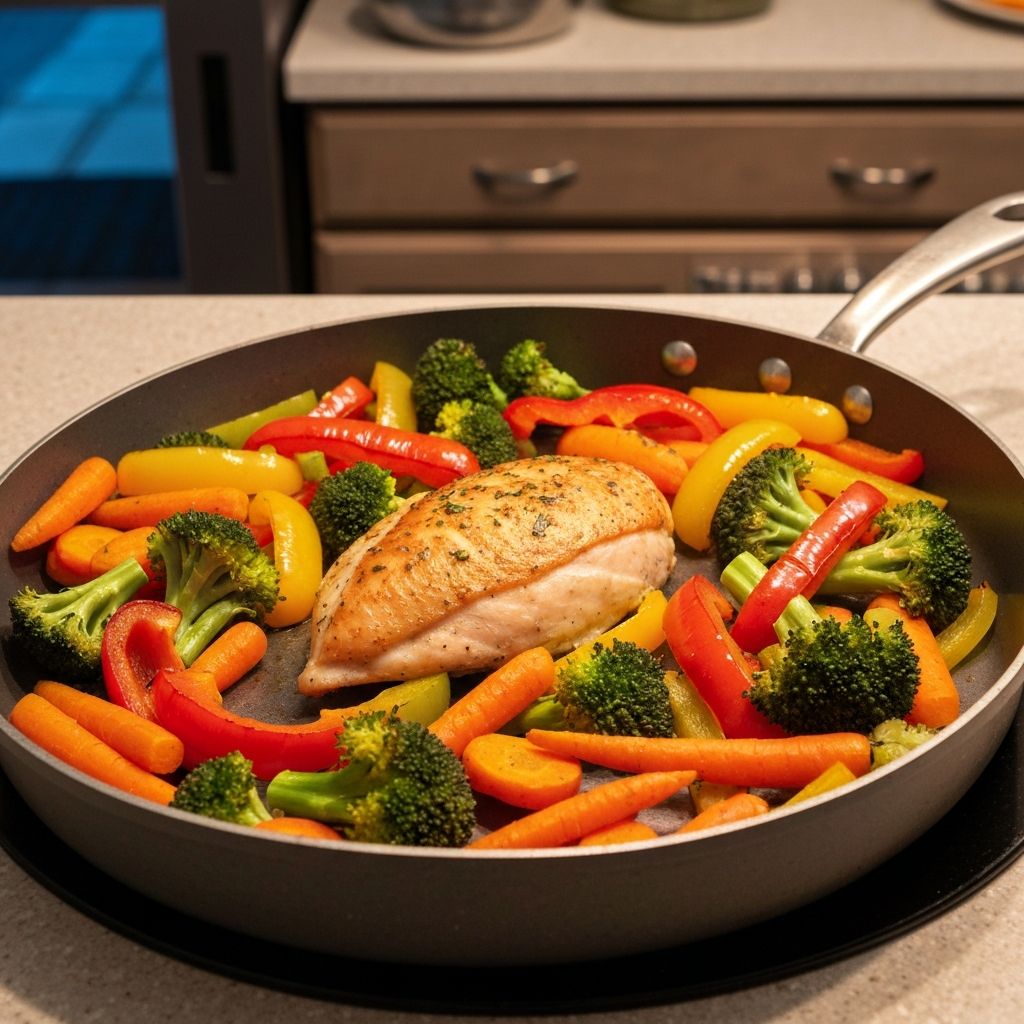
The evening meal on busy workdays often involves balancing the desire for a satisfying dinner with limited time and energy after a full day. This article explores educational concepts related to preparing simple dinners that incorporate varied ingredients while minimizing preparation complexity.
Time-Efficient Cooking Methods
Certain cooking methods are commonly associated with quicker dinner preparation:
One-pan or sheet pan cooking involves placing multiple ingredients on a single cooking surface, reducing both preparation steps and cleanup. Stir-frying uses high heat and quick cooking times to prepare vegetables and proteins rapidly. Steaming cooks vegetables quickly while preserving their texture. Broiling applies direct high heat and can cook proteins and vegetables in relatively short timeframes.
These methods represent common approaches to time-efficient cooking rather than recommendations for any specific individual.
Simple Dinner Frameworks
Many quick dinner preparations follow general frameworks that combine different food components:
A protein plus vegetables plus grain pattern might involve grilled chicken with roasted broccoli and quinoa. A one-pan meal could combine seasoned fish with roasted tomatoes, peppers, and potatoes. A stir-fry typically includes vegetables and a protein source served over rice or noodles. A bowl-style dinner might feature a grain base topped with cooked vegetables, beans, and a simple sauce.
These frameworks illustrate common dinner structures but are not prescriptions for individual meal planning.
Versatile Dinner Ingredients
Certain ingredients appear frequently in quick dinner preparations due to their versatility and relatively short cooking times:
Quick-cooking vegetables like bell peppers, zucchini, broccoli, spinach, and tomatoes can be prepared through various cooking methods. Proteins with shorter cooking times include chicken breast, fish fillets, eggs, and tofu. Quick-cooking grains include white rice, couscous, and quinoa. Canned beans offer protein without cooking time.
Having versatile ingredients available can facilitate quick dinner assembly on busy evenings.
One-Pan Dinner Concepts
One-pan dinners simplify both cooking and cleanup by preparing all meal components on a single sheet pan or in one skillet:
A sheet pan dinner might combine chicken pieces with chopped vegetables like carrots, broccoli, and potatoes, all roasted together with seasonings. A skillet meal could involve cooking a protein in a pan, then adding vegetables and perhaps a simple sauce. A one-pot pasta preparation cooks pasta together with vegetables and seasonings in a single pot.
These concepts describe common approaches to simplified dinner preparation.
Batch Cooking Strategies
Some people prepare certain dinner components in larger quantities to use across multiple meals:
Cooking a larger portion of grains like rice or quinoa once or twice weekly provides ready bases for multiple dinners. Preparing proteins in bulk, such as grilling multiple chicken breasts, offers ready protein sources that can be incorporated into different meals. Chopping vegetables in advance can reduce evening preparation time.
Whether batch cooking strategies fit into any individual's routine depends on their schedule, storage capacity, and preferences for freshly prepared versus advance-prepared components.
Fifteen-Minute Dinner Ideas
Various dinner options can be prepared in approximately fifteen minutes using simple techniques:
Scrambled eggs with sauteed vegetables and toast combine protein, vegetables, and grains quickly. Canned beans heated with tomatoes and spices served over quick-cooking rice make a simple meal. Pre-cooked rotisserie chicken combined with bagged salad greens and whole grain rolls requires minimal preparation. Pasta with canned tomatoes, vegetables, and seasonings cooks quickly in one pot.
These examples illustrate quick dinner concepts rather than specific recommendations.
Simplifying Dinner Decisions
Decision fatigue at the end of busy workdays can complicate dinner preparation. Some strategies people use to simplify dinner decisions include:
Maintaining a rotation of familiar simple dinners reduces the need to create new meal ideas daily. Planning dinners for the week ahead eliminates daily decision-making. Keeping a short list of quick dinner frameworks provides structure without requiring detailed planning. Having versatile staple ingredients available enables improvised dinners without requiring specific shopping.
Different approaches to meal planning and decision-making work for different individuals.
Scaling Dinner Preparation
Cooking larger dinner portions can provide next-day lunches or additional dinners, reducing overall weekly cooking frequency. This approach works well for preparations like grain bowls, stir-fries, sheet pan meals, and soups or stews.
Some preparations maintain their quality well when reheated, while others are best consumed freshly prepared. Whether to cook larger portions depends on individual preferences, household size, and comfort with eating similar meals on consecutive days.
Balancing Simplicity and Variety
While simplifying dinner preparation is often desirable on busy workdays, many people also value variety in their meals. Approaches to balancing these considerations include:
Using the same cooking method but varying the vegetables and seasonings creates different flavor experiences with similar effort. Rotating between different dinner frameworks throughout the week provides structural variety. Incorporating different herbs, spices, or simple sauces can create varied flavors from similar base ingredients.
The balance between simplicity and variety any individual seeks depends on their interest in food diversity and available time.
Educational Information and Context
This article provides general educational information about dinner preparation concepts for busy schedules and is not personalized advice for any individual. Nutritional needs vary widely between people based on factors including age, activity level, health status, and personal preferences.
The dinner ideas described represent common approaches but should not be interpreted as recommendations specific to your circumstances. Individual dietary decisions are personal and where appropriate may involve consultation with qualified professionals.